Social Icons

Pages

Featured Posts

Monday, 14 March 2016

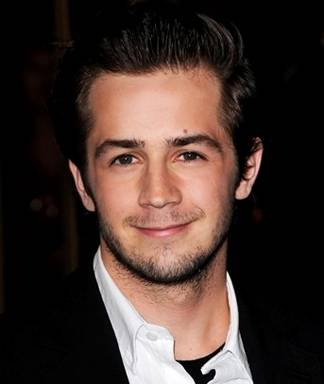
Michael Angarano

Jared Hess has a thing for weirdos. The Napoleon Dynamite director loves showcasing a Middle America that's terminally tacky and infested with oddballs. Enter Michael Angarano, Hess' most recent weirdo, starring in the director's latest venture into idiosyncrasy, Gentlemen Broncos, opening this weekend. Angarano plays a wide-eyed aspiring fantasy novelist whose manuscript, Yeast Lords, gets stolen by his idol, a famous author played by Flight of the Conchords' Jemaine Clement, who reworks the story into Bowie-fied camp.
Angarano isn't as naïve as his hapless Broncos character. The Brooklyn-bred 21-year-old has been around the cinematic block, with supporting roles in Lords of Dogtown, Sky High, and David Gordon Greene's Snow Angels. And yes, that was him earning laughs as Jack's long-lost son on Will & Grace. Next up for Angarano is a star turn in Ceremony alongside Uma Thurman that's sure to conjure up all kinds of Mrs. Robinson comparisons. He talked to ELLE.com about life on the ranch.
ELLE: Gentleman Broncos is a bizarre script. Would you say it's your kind of humor?
Michael Angarano: I think so. I don't know how to describe my sense of humor, and I definitely don't know how to describe the sense of humor of the script. You have to see Jared's earlier movies to get a grasp on it. But it's kind of a novelty, to get something like that. You have a character who is victimized throughout the whole movie. This pathetic, just sad, winning character gets put through the worst.
ELLE: Were you won over by the script immediately?
MA: I was. I really was. But it took me a while to get through the sci-fi sequences.
ELLE: Was it the projectile vomiting that tripped you up?
MA: Yeah—there were phrases like "projectile vomit" in there and "battle stag." I was just like, What is this? Like I honestly don't know what he's talking about. I didn't know what to think.
ELLE: Were you a Hess fan before?
MA: I hadn't seen Napoleon Dynamite—and still haven't, actually. But I've seen Nacho Libre, and I think it's a great movie.
ELLE: How did you get the part of Benjamin in Broncos?
MA: I went in and auditioned for Jared, and it just felt right. That was it. We just showed up. I think Jared casts his actors with their personality in mind, so no rehearsal is required. He just puts them on set and lets them go.
ELLE: Did you guys improv your scenes at all?
MA: Certain characters did. My character had very minimal improv. Benjamin does not try to be funny at any point in the movie. Literally, at no point is he trying to make a joke. I looked at Benjamin as a severely depressed guy.
ELLE: You're in New York filming Ceremony with Uma Thurman. How is that going?
MA: It's going great. I was actually supposed to do Ceremony right after filming Broncos, but it got pushed until now.
ELLE: What did you like about this script?
MA: There's just something about it. The story, the character—I don't know, everything?
ELLE: What's it like working with Uma Thurman?
MA: She's so great, so perfect for the role. It's kind of astonishing working with her.
ELLE: Can you single out a favorite of all the movies you've done?
MA: As a movie in general, I think Snow Angels. I'm biased because I really love David Gordon Greene. And I like Gentlemen Broncos a lot. They're very indulgent movies, not exactly trying to please the crowd. I think the movies that don't try to please people are movies that you respect more in the end.
ELLE: You come from a family of performers—your parents own dance studios in New York. Do you dance at all?
MA: I was forced to dance all my life.
ELLE: You hated it?
MA: No, I like it. I love dancing, actually. My mother taught children's dance, ballet, tap, jazz...I'm very flexible.
ELLE: Could you do a split on command?
MA: I think I'd pull my groin!

ezra miller + michael angarano went to prison ...and lived to tell about it

The Stanford Prison Experiment tells the disturbing real-life tale of Dr. Philip Zimbardo and his notorious 1971 study that recruited a group of young men to simulate prisoner-guard dynamics in a mock prison over a two-week span. What occurs next is chillingly recreated by director Kyle Patrick Alvarez and a group of some of Hollywood’s brightest young actors, including Ezra Miller and Michael Angarano, who play opposite sides of the same coin in the disturbing thriller. Angarano’s character takes his guard role to a ferocious extreme, adopting a Southern accent and a sadistic streak, while Miller’s prisoner, known in the film simply as 8612, initially tries to lead a rebellion before mentally coming apart. Both actors turn in standout performances among a group of peers that includes rising stars like Thomas Mann, Tye Sheridan, and Nicholas Braun.
We sat down with the two actors earlier this week and found them in a candid mood. Besides talking about the demands of recreating the nightmarish experiment, Miller and Angarano detailed what it was like acting alongside the same actors they’ve been auditioning against for years, spoke about their thoughts on—and in Miller’s case experience with—incarceration, and what they might choose for their last meal if they suddenly found themselves on Death Row. (The conversation was more lighthearted than it sounds.)

Ezra, you do a lot of screaming in this movie. Did it kill your vocal chords?
E:
Several times, yes. It also really hurts my head. When you yell a lot, you get that specific headache where your brain is like, “Stop, man.”
M: I just did a play workshop where I was screaming, and after the first day of rehearsal I was like, I gotta change something. I gotta do some serious breathing exercises, because that messes you up.

Did you listen to recordings and watch footage of the real Stanford Prison Experiment as a reference point?
E:
Yeah, certain reference points felt good to have. We weren’t basing these performances on frame-by-frame studies of these people. Kyle encouraged us to take license in creating these characters, but certain moments are just too good. You couldn’t possibly make it up. The scene that Michael and I do at the end of the film, we did that from looking at the video because it was so good. The actual conversation that happened on video is so wild that you can’t even believe it.

I was mesmerized by that scene. I was so hoping that your characters would meet again after the experiment, and I was glad they did.E: It’s important to know that that’s actually one of the liberties that was taken in the making of this movie, in the terms of straying from actual events. That was not my character that did that interview with Michael’s character. It was actually Thomas Mann’s character.
M: How emotionally affected he was, and how unemotionally affected my character was to me, the greatest frame of reference for my character, because it gives you a huge insight as to what he was really thinking about, what instigated this other character to come out of him. He was like, “It wasn’t me. I wasn’t doing anything. I just wanted to have some fun and earn that money.”

Neither of your characters are given any backstory. Is that something you usually rely on to flesh out a role, and was this a challenge?
M:
I think it depends greatly on what kind of role you’re playing and what the script is asking for, but what I think is so powerful about this—is that you don’t know who these guys are, where they came from, if they’re actually good, decent people. I think it’s an important thing to know—that all or any notes of individuality or character development that had built these guys up to who they were before they came into the experiment was completely stripped.

What was it like shooting on the same set with the same costumes every day? Did that sense of monotony help?
M:
To be honest, I don’t think we felt it as much as they did because we were able to go home and eat and leave, but I think it really helped us to know that the dimensions of the hallway that they built were the exact dimensions of the hallway in Stanford.
E: And what we were wearing was pretty darn close to exactly what they wore.
M: Yeah. Kyle did give us a lot of liberties, but a lot of scenes we didn’t want to stray too far from the material because they’re important beats that we have to get. But those lineups would sometimes go on for like 15 minutes. Remember those days when we would just be in these lineups and not go outside?
E: Yeah.
M: They would call cut and be like, “What world did we just leave?”
E: And that’s something that was really cool about how well we were able to maintain the pleasant, really fun working environment, because we really were able to feel the contrast between “cut” and “action.”

You both worked with about 20 other young actors who are your peers but also your competition. What was that like? Were you initially cautious about it?
E:
For sure, because the hyperbole of saying society right now at large encourages us to be competitive with one another. As young actors of the same age range, there’s an encouragement for us to compete where we’re trying to win out the role.
M: The cast of The Stanford Prison Experiment is essentially all of the guys who auditioned for Spider-Man and didn’t get it.
E: All of the Spider-Man rejects, cursing Andrew Garfield’s name to the skies, but together. But no, I would say it was really, really refreshing and empowering and amazing to work with and collaborate with this group of people who you’ve been told are your competition, but you know are your comrades. We’re all in this thing, we’re doing this crazy thing together and it should be together. I’ll also say that I’ve had a lot of terrible experiences over the course of my life with large groups of men. It’s been like a lot of the worst experiences of my life. And this was really transformative and healing for me, in a very serious way.

Really?
E:
 One-hundred percent. And for the first two weeks, I was waiting for the axe to fall, you know what I mean?

Was there any sort of trepidation when it first started, wondering who your allies and your enemies were?
E:
 One-hundred percent. I’m flashing back to very, very rough times and I’m like, “When are they gonna turn?”
M: “When are the switch blades gonna come out?”
E: Because I was traumatized as a middle schooler in the 1950s.
M: When are we gonna go fight under the bridge?
E: Yeah, like when are we gonna meet under the bridge? Comb my hair back son, roll up my sleeves, and have a nice rumble.
M: Everybody was very aware that it could have easily segwayed into a life-imitating-art situation. It was one of Kyle’s main concerns walking into it. We all had meetings and we were all trying to impress upon him that we were all going to take it very seriously..

Was there an extra amount of goofing around because (A.) you’re all sort of the same age and (B.) to alleviate the heavy tone?
E:
Massively. It was really important that we say inappropriate, horrible things that will never be repeated off of the set of Stanford Prison Experiment in those interment periods so that we could shake it loose.
M: It kind of became like we receded for 10 years and became the middle-school versions of ourselves.
E: Yeah, but again, for me the redeemed middle-school versions of ourselves where we weren’t turning on each other.


Did you guys talk about parts that you didn’t get and the other person did?
M:
Literally. I’m not exaggerating.
E: One-hundred percent. All day.
M: Very much so.

Have either of you ever been imprisoned or felt like you’ve been imprisoned?
E:
Yeah, I’ve been in jail.
Did you find that to be hellish?
E:
Yeah, and I’ve really had the experience of noticing how few of my capacities are substantial, how when you’re in this place like The Tombs—and like Zimbardo said to his guards before the experiment—it’s simply a situation where we have all the power and they have no power. And to really feel how much of the entity I consider to be me is actually reliant on very flimsy and transient external conditions, was a really challenging and important series of experiences in my life that first of all, made me really not want to get arrested anymore, and second of all, made me really want to cultivate spirit, really want to cultivate my understanding of my innate self and build up that guy because this guy is going down when shit hits the fan—no question. He’s falling apart and so there better be the truer, internal warrior spirit that we can pull out during those times.

So you’re saying if you were in solitary confinement, you would want to be able to keep your shit together?
E:
I would want to know how to meditate for 14 hours, at least.

Michael, how do you think you’d handle being locked alone in a room for a day or two or three?
M:
I mean, we’re learning more and more about what solitary confinement does to the human mind, and I think it’s one of the most dangerous weapons that we, as humans, have.
E: Cruel and unusual punishment.
M: To isolate each other because I think your mind just disintegrates rapidly. I think I’m completely speaking out of place and with a great deal of baseline ignorance, but I have no idea how I would react. I would think that my mind would slowly disintegrate like everybody else’s, but I would also hope that I could find some level of peace within it. There are amazing stories of people who have endured years of that. I don’t think at this moment in time I’m physically capable of really withstanding it, but I don’t think a lot of people are.

Ezra, what did you learn from your experiences in jail?
E:
 I definitely felt like I entered the courtroom and suddenly, things separated me from the people I had just been incarcerated with. I definitely felt that if I was a person of color, according to my crimes, I might have been sent to Rikers for a stretch, and I can tell you with great assurance that that would have crushed and ruined me. Consider the horror of incarceration and really what it’s doing to people, as we claim it’s for the purpose of rehabilitation. Beautiful kids who go into Rikers Island come out as killers. This is our society’s means of reforming people? That’s rugged.

If you guys were both on Death Row, what would your final meal be?
E:
I’ve thought about this a lot. There’s a great George Carlin routine where he’s prolonging his death by being indecisive about the meal. Honestly, I think it would be ramen. I’ve thought about it a lot and I think a nice bowl of ramen, because then you’d also be weighed down and taken out of the game a little, so you’d be a little food coma-ed for the horrible, lethal injection that is probably terribly painful, speaking of cruel and unusual punishment. I’d want to have a little ramen downer on me.
M: A great sushi meal is always nice. You feel amazing after a really great sushi meal.
E: But this is what I’m saying Michael, think about this, you’re going to be too alert. You’re going to be feeling great, like you just had this light meal.

You want to knock yourself out a little bit.
E:
Also how is the mercury going to interact with those chemicals, you know what I mean? You gotta think about it. It’s very dangerous.
M: Mom’s home-cooked meal is probably what I would do.
E: My mom is making me some ramen, you hear this mom?

Thursday, 12 November 2015

Ezra Miller, Michael Angarano, Nicholas Braun talk 'Stanford Prison Experiment'

Philip Zimbardo, Michael Angarano, Nicholas Braun, Kyle Patrick Alvarez, Ezra Miller, and Billy Crudup attend the New York premiere of 'The Stanford Prison Experiment' at Chelsea Bow Tie Cinemas on July 15, 2015 in New York City.
Photo by Andrew H. Walker/Getty Images

Ezra Miller and Michael Angarano on Going Method and The Stanford Prison Experiment


Ezra Miller, Michael Angarano Photo: Gary Gershoff/Taylor Hill/WireImage/FilmMagic
The pioneering 1971 Stanford Prison Experiment may have been hell for its participants, but that's exactly why the new movie based on it was enticing for its many up-and-coming young actors. Foremost among them are Ezra Miller and Michael Angarano, who play two Stanford students drafted to participate in a psychology study that will split young men into groups of prisoners and guards. The experiment was meant to last two weeks, but less than a day in, it had already devolved into an eye-opening treatise on abuse of power, as the guard played by Angarano and the prisoner played by Miller locked horns and were pushed to psychological extremes. Vulture recently caught up with both actors to talk about how well they'd known each other before they found themselves screaming at each other on set for weeks.

The experiment in this movie kind of doubles as a metaphor for acting, so my first question to you guys is this: As an actor, are you more like Michael's character, who can do screwed-up things at work and then leave it all behind at the end of the day, or are you more like Ezra's character, who finds that the simulation is personally affecting him?
 
Ezra Miller: That's the dopest, most meta question I've ever heard. I think that I've spent a lot of time trying to figure out where I fall on that spectrum, and ironically enough, this film was a huge step for me in endowing my own ability to leave a role behind. I think I've done a lot of experimentation with picking a role up and throwing my actual self into it, and I think that is good and has its place, but it's a magical understanding to know that you don't need to do that. You can get the same power of performance while maintaining your society.

Michael Angarano: I have a very similar journey to Ezra's, I think, in the sense that I've tried a lot of different things. Not to say that I don't admire someone who takes it home with them and is personally affected by a role — depending on the kind of material you're working with, stuff will come home with you, and you can't help it — but now I admire the skill and the craft of leaving it all on the set. I kind of strive for being able to go home and having a totally separate life. I worked with Christopher Plummer once, and I was really blown away by his ability to step in and out of character so seamlessly that it was almost unfair. But there's a lot of effort required for that effortlessness.

Miller: I had a similar experience with Tilda Swinton on We Need to Talk About Kevin, where I was this wild, young actor. I had been watching her all film long, and we came to this crucial scene where I was like, "Tilda, we should do a thing where you tell me something about your life that you don't want me to know, and then I'll know it, and you'll know that I know it!" And she was like, "You know what, darling? I think if we're just present when the time comes, we'll know what to do." And that's a really beautiful idea that's changed my view on this exact subject. If we're really present, everything is available to us.

Angarano: A lot of really great actors I've worked with tend to be older, and I think the better you know yourself as a person, the better an actor you can be. So as I've gotten to know myself as a person and grown up, I've realized that. Although certain people do need to stay in character the whole time, and that's just what they require as a person.

Miller: And certain people should! I think we're both trying not to invalidate that method, which is still something that I plan to do at certain times. I define my acting method as "whatever the fuck it takes." Whatever it takes to make the thing happen, so you know you got it and you hit the moments you needed to. So I'm not swearing off the "Daniel Day" of it all. I'll have my "Daniel Day" day again, I'm sure.

So what was it about this movie, Ezra, that encouraged you to concentrate on the craft rather than throwing yourself into it headlong?
 
Miller: I think we were being really intentional about not going too Method on this one, because we were making a movie about the re-creation of a prison. If we'd gone there too much, we would have run the risk of simulating the simulation all too well, and then we'd be in prison.

What appealed to you both about the characters you play in this? I could have seen you switching roles, too, like a theater company that trades off every night.
 
Miller: And that would have been really fun, and honestly, we should probably do that as a play experiment. That'd be a good exercise. The Stanford Play Experiment.

Angarano: That's what I liked about the script. While there are a lot of roles, I found each role to be very intrinsic and important to the story. When I met with the director, it wasn't for a specific part. I talked to him about the parts that I thought were good, but what's so great about the experiment is that it strips the ego away to the degree that you realize the character you thought you would play in the movie is probably the character that you're not in real life. Even in the real experiment, the guy that my character was based on, I think he would have been very different if he'd been picked as a prisoner, not a guard.

Michael, you told me at Sundance that when you watched your performance in this, you were shocked by some of the things you found yourself saying. Do you often have that experience?
 
Angarano: I always want to watch something I've done, so that I know what I didn't do well. But yeah, sometimes you watch something and you don't recall it. It was a choice that you made and you weren't aware you made it, and that's kind of all you can ask for.

Miller: That's how you know you're doing it well, when you completely forget the doing of a work of art. That means you were open and that something else could come through. Really, that's my goal beyond being an actor, is just being an open channel.

Had you guys known each other well before the movie?
 
Miller: I think we knew each other for about four years before the making of this film, through mutual friends. Michael actually came out for a friend's birthday when I was working on a film with that friend.

Angarano: They were making Perks of Being a Wallflower, and I essentially knew the entire cast.
Miller: Except for me, until you came out!

Michael, what was your first impression of Ezra?
 
Miller: Oh, I want to hear this.
Angarano: Honestly, I was fascinated by Ezra. He was somebody I could talk about stuff with that seemed very, very deep. I can remember at one point we went on a walk to a concert and I very specifically remember in the middle of talking, thinking, Wow, this is a great conversation.
Miller: Having not really seen much of your work, I remember meeting Michael and saying, "Oh, this motherfucker is a good actor." I don't know what it is … sometimes you can just catch the light off someone in a first interaction. Also, he'd been getting pretty hyped up. He had some hype men around him: "Ladies and gentlemen, the unbelievable, the incredible Michael Angarano!" But yeah, I remember thinking, This dude's got some shiny parts.

Okay, last question: Michael, please tell me about the Drunk History episode where you played Walt Disney. I've always wondered what it's like for an actor to mime along to all that.
 
Miller: Thank you! I've wondered this, too, and it's hard for me to be the guy to ask. Tell us, Michael.
Angarano: You get the actual drunk-person interview a couple days before, so you're able to learn it …

Miller: … but not too well.

Angarano: You're also like, "Oh fuck, this is gonna be really hard, actually! I have to learn this guy's pattern of speech in two days!" They play it for you as you're saying it, because there's no sound in the scene. So, thank God, they're able to play the interview as you're acting it. And they have a great hair and makeup team helping you along.


Miller: I have a question, if you don't mind. Michael, are you concerned that when Walt Disney comes out of cryogenic freeze, that he's gonna come after you and say, "Hey, man, that wasn't cool"?

Angarano: I actually think it's a very loyal and fair interpretation of Walt Disney.

Uma Thurman & Kristen Stewart’s Ex-Boyfriend Michael Angarano Walk The NYC Red Carpet For ‘Ceremony’

Getty Images

How funny is it that Uma is in a very awkward love triangle with Robert Pattinson and Kristen Stewart’s ex!

Uma Thurman has locked lips with both Robert Pattinson, her Bel Ami costar, and Kristen Stewart’s ex-boyfriend Michael Angarano — lucky! Uma is quite the cougar in her upcoming flick Ceremony which co-stars Michael and HollywoodLife.com was front and center on April 5 as they strutted down the NYC red carpet for the Ceremony premiere hosted by the Peggy Siegal Company Event.

Uma played the cougar part perfectly looking stunning in a skin tight grey and blue dress and strappy silver sandals. Other A-list celebs walked the carpet like Alexa Chung and father-son duo Henry and Max Winkler.

Afterwards the stars then headed downtown for the after party at Don Hills. I wonder if Uma will swap stories with K-Stew about who is the better kisser!

Kristen Stewart’s Ex-Boyfriend Has A Hot New Hollywood Girlfriend

Michael Angarano Juno Temple Dating
Invision/AP

Before there was Rob and Kristen, there was Michael Angarano and Kristen! While she’s famously moved on, Michael’s just landed himself another Hollywood starlet girlfriend: Juno Temple!

Michael Angarano, Kristen Stewart‘s boyfriend before Robert Pattinson has now fallen in love with another co-star — exactly how he met Kristen! Will it work out?

Michael has a knack of falling in love with co-stars. And now Us Weekly has reported that Kristen’s former boyfriend has started dating actress Juno Temple, 23. The new couple appeared in the 2012 fantasy thriller The Brass Teapot together. An insider tells the magazine that they, “Hit it off and had great chemistry from the start,” adding, “It was an intimate set and everyone really bonded. They were both single and it just worked.”

Michael’s relationship with Kristen started in 2004, when they met on the set of Speak, but didn’t last as Kristen’s star started to rise in 2009. Then, of course, she began dating Rob.

Michael Angarano’s New Relationship With Juno Temple Is Blossoming!

Michael and Juno have been seen recently together, both at the premiere for her film, Afternoon Delight, at the Sundance Film Festival and at the film’s after party, where Us Weekly sources state that Juno “ran over to him, wrapped her arms around him and started kissing him.” The report adds, “They try keep it pretty quiet but very supportive of each other. She’s blowing up and she loves having him around to help take away some of the stress of it all.”

Sounds pretty romantic to us, and we only hope for the best for the duo. It seems like they are doing better then Rob and Kristen!

So HollywoodLifers, are you happy for Michael and Juno? Sound off below!

Ezra Miller and Michael Angarano on the Dark Side of Human Nature in 'The Stanford Prison Experiment'

"When someone acts on the power structure in a violent way, we all act horrified. The truth is that we all bear communal responsibility."
 
Stanford Prison Experiment
IFC Films "The Stanford Prison Experiment"

Human nature is a deeply nebulous topic. But while defining it is difficult, studying it — reproducing its manifestations in a lab setting — is even more daunting. Enter Dr. Philip Zimbardo. In 1971, Zimbardo, then a psychology professor at Stanford University, designed an experiment that would, alongside Stanley Milgram's electric shock experiments, come to serve as the definitive psychological investigation into human nature. And the results weren't pretty.

Though the Stanford Prison Experiment began as an inquiry into the causes of conflict between prisoners and guards, it transmogrified into a power-play that exposed our deep-seated human desire for conformity and power. Twenty-four male students, randomly assigned roles as prisoner and guard, were selected to live in a 14-day mock prison in the basement of a Stanford University building. The simulation quickly turned into reality: The guards became increasingly rapacious in their desire for control, instituting cruel authoritarian measures and in some cases employing psychological torture. None of the participants spoke out against the unjust punishments administered. Two prisoners suffered psychological breaks and quit the experiment early, and after seven days it was terminated. The most harrowing perpetrator? Zimbardo himself, who became so enmeshed in his prison warden identity that he permitted, and in some cases encouraged, abuse.

Michael Angarano is a power-hungry guard and Ezra Miller his defiant prisoner in Kyle Patrick Alvarez's interpretation of these events. After enduring development purgatory for 20 years, "The Stanford Prison Experiment" opens Friday at critical juncture in modern American history. Indiewire spoke to Angarano and Miller about the ways in which the film sheds light on Ferguson and informs our reevaluation of the criminal justice system. The actors also talk about their upcoming roles (Miller in "The Flash" and Angarano in "The Knick"), the benefits of growing up as a child actor, and the unique challenge of their generation.

Why did you want to take part in what is essentially a dramatization of an iconic experiment? 

Ezra Miller: This experiment holds a lot of sway to this day. It’s become 101 reading for any psychology class. Zimbardo’s work has been drawn upon in a lot of very real social situations. I think it remains really relevant... Probably more relevant than ever, as we’re now the country that incarcerates the most people by far. I think that it’s also a great time to be thinking about and asking questions about problems that are systemic, when it could be tempting to blame individuals. Also, I just thought it was a dope script and I wanted to get down into this nice acting sho-lange.
Michael Angarano: It’s the greatest acting sho-lange for young men.

For all the laymen out there, what, exactly, is a sho-lange?

Miller: It would be the pseudo-French pronunciation of “challenge.” A nice sho-lange [Solange] Knowles, if you will.

[Laughs] So besides the sho-langing elements, what was compelling about the story?

Angarano: Well, it’s been around. I read the script 8 years ago and was too young to even be considered for it. It was a completely different incarnation of cast and director. I feel like that’s been happening, or so I’m told by Zimbardo, for the past 25 years. They’ve been trying to make the movie for a really long time. That just means that the story has really reached out, not only in its original intention of social psychology, but also to actors, and writers and directors. It’s such a great subject and it really is one of those things that feels like an actor’s dream.

Miller: Michael, let me ask a little follow-up question here. Do you feel you may have held back progress on the making of the “Stanford Prison Experiment” film because you read it when you were 9 and were just wishing so hard that it got prolonged?

Angarano: It could very well be.

Miller: Well, you are to blame and thank, my friend.
The real Stanford Prison Experiment in 1971.
Chuck Painter / Stanford News Service The real Stanford Prison Experiment in 1971.
 
This is impeccable timing for this film to come out, given the necessary reevaluation of our criminal justice system spurred by the deaths of Michael Brown and Eric Garner. How will thinking about this film — and the experiment in general — 
impact the way people think about these current events?
"When someone acts on the power structure in a violent way, we all act horrified. The truth is that we all bear communal responsibility in the system." Ezra Miller
 
Miller: I’ll definitely say that this seemed to happen for a reason, exactly at this time. We were making this movie while the riots were happening in Ferguson and the protests and all the organization and networking that was starting to really spark off there in the wake of Michael Brown’s death. It was crazy. I will never forget that we did that scene where Nicholas Braun’s character hits my character in the face when my character has crossed the line. I remember that we were doing it all day. It was a tough scene. I accidentally really did get hit in the face, which I believe is the take that was used. I went home that night to my little hotel cave and was watching whatever it was, Rachel Maddow, live, and saw pretty much the same choreography, beat for beat, happen on a street in Ferguson. I definitely think that what Zimbardo put forward in the wake of this experiment is that when something horrible — tragedy, caused by one human hurting another — happens in our society, we are very eager to point fingers of blame at a single individual. I think that a large part of the movement that has sprung up around all of these people’s deaths has to do with the fact that this problem is massively systemic. We’ve created a situation, just like Zimbardo created a situation in the basement of the Stanford psychology department. We’ve created this situation of white supremacist, imperialist, racist state. Now we’re living in those power structures. When someone acts on the power structure in a violent way, we all act horrified. The truth is that we all bear communal responsibility in the system that we collectively create in society.

But we can't absolve ourselves of individual responsibility, can we?

Angarano: What’s so interesting about the experiment, which is a microcosm and a metaphor for other similar situations, is that none of the guards really spoke out to the other guards. There was no individual who was courageous enough to speak up to or against the people whose side he was on. I feel like the [students who were chosen to be] prisoners had this egotistical, prideful thing about…
Miller: ...being in the righteous position.

Angarano: These kids were also Vietnam protestors, some of them. These were people who were very indignant in the first place about systems and guards. I think it just says something about the duress that we feel under social situations to not only act a certain way, but to not act out of a certain way. It’s a fascinating thing about the experiment that it even took Zimbardo himself way longer than it should have to actually stop the guards from doing what they were doing. Nobody stopped them. Nobody did anything.

Miller: I think that is a really, critical answer to that question. Essentially, where there’s potential for individual accountability to play a massive role is in individuals standing up and speaking out against systems of oppression when they see them, as they see them.
"The Stanford Prison Experiment"
IFC Films "The Stanford Prison Experiment"
 
"There will be defining moments in everyone’s life where we’ll have opportunities to know our own real substance." --Ezra Miller
 
Do you think you'd have the strength to dissent? 

Angarano: I think you could think about it, but what you learn from the experiment is that you really don’t know.

Miller: There are those people who do step up, who do speak out. I think about the Holocaust. There are countless, countless German people, soldiers, officials, who stepped up and were murdered. Countless. I think it really comes to this idea that there will be defining moments in everyone’s life where we’ll have opportunities to know our own real substance. A big part of the experiment’s findings is that our identity is fictitious. When you end up in a serious situation where violence is happening, all of your supposed internal mechanisms rapidly dissolve.

In the experiment, after 24 hours, you're just a number. Societal constructs are stripped away.

Angarano: Right. What’s so interesting is that as deep as this all sounds, it really is that deep. It goes down to your complete unawareness of ego. You lose all form of identity. The guards lost their identity because their eyes were covered and they had these uniforms on. The prisoners lost all form of identity by being called their numbers and by wearing smocks and having these do-rags on their heads. Everybody was stripped of individuality. How we interact, the civility about how we should go about everyday life was completely gone. All form of time left them. They didn’t know if it was dark or if it was light. They didn’t know if it was night or day.

You mentioned defining moments. Can you think of any in your own lives?

Miller: Oh, my goodness, I'm bathing in defining moments. Every day I wake up defining [laughs].
"Our generation seems to be at a lack of power. We don't have a cultural revolution." --Michael Angarano 
 
Angarano: Every time you see a march going on outside, even though there are so many marches going on outside, I feel like that’s a small act of defiance. That’s a defining moment. We just live in a time where there have been so many of them that they didn’t seem to have as big of an effect as Kent State did back in the day or the Los Angeles riots back in the day. While it’s encouraging, it’s also kind of troubling. What more can our generation really do? Our generation seems to be at a lack of power. We’re not hippies, we don’t have punk rock.

Miller: We are hippies, Michael! We do have punk rock! Don’t you see?

Angarano: What we don’t have is a cultural revolution.
Ezra Miller in "Afterschool" (2008)
IFC Films Ezra Miller in "Afterschool" (2008)
 
"I’ve fucking failed hard and fallen apart and not done the right thing." --Ezra Miller
Miller: I disagree. Especially when I look at the black community in America, the youth, and I look at the art that’s coming of that community: To Pimp a Butterfly, and the new A$AP album. They're representing a very radical, very departed ideology. I think that you might be right that there are big portions of our generation that are really bathed in consumerism and really blinded by the light of the phone screen and could step up a lot. I’ve had some defining moments where I’ve fucking failed hard and fallen apart and not done the right thing and not intervened when I saw an act of domestic violence or any of these types of things. I’ve failed. That’s how we learn, that’s how we start thinking about the next defining moment and what we’re going to do between now and then to be ready when it comes.

Probably becoming "The Flash" will be a different kind of defining moment for you, Ezra. How did that come to be?

Miller: I’d love to be a fly on the wall during the “who’s going to be ‘The Flash’" argument.
Angarano: You’re saying that it was out of your control, ultimately.

Miller: Yeah, it was out of my hands. I don’t really know how it happened, that I became The Flash. To my understanding, usually someone’s either struck by lightning into a basket of chemicals or they inhale heavy water vapors [laughs]. So I think that’s how it happened to me, too. Just in a more abstract sense.

What's next for you, Michael?

Angarano: I have Season 2 of “The Knick.” I directed a movie, which I’m very proud of and can’t wait for people to see.

Miller: Which I’ve heard is super dope, by the way.

Angarano: We’re just finishing it up. It’s called “Avenues.” It’s also starring Nick Braun, Ari Graynor, Adelaide Clemens and Juno Temple. It’s about a young guy celebrating his 25th birthday a month after the death of his older brother. It’s a little bit of a drama and a comedy. It’s both. I hope it comes to a festival near you very soon.

Miller: Or very remote from you, but awesome.

Like a destination wedding, but less obnoxious. 

Miller: Yeah, a really cool place where you could go to see it.
Michael Angarano in "Almost Famous" (2000)
Columbia Pictures Michael Angarano in "Almost Famous" (2000)
You both grew up acting. What were the benefits or challenges of having that kind of childhood?

Miller
: I think the benefits outweigh the challenges in massive ways. I think it’s an amazing, beautiful right that unfortunately in our society is an extremely rarified privilege. A child is a super-powered being, let us not forget. Stating an intention for my life of what I wanted to do and in that moment, and being told, “Okay, great! Do that. Sounds cool.” That's rare. It happens a lot that a child says, “I want to do this,” and the answer is, “Well, okay. But have you thought about the reality of that?”

Angarano: Or, conversely, a kid says, “I don’t want to do that,” and everyone’s like, “You are doing it and you’re going to love it,” which is unfortunate. I feel like we both are not those cases, which makes us really lucky.

Miller: It’s an amazing privilege when a kid can be allowed to do what they wish to do in terms of a creative or exciting endeavor. When the resources can be present to enable the kid to have access to some version of those things. I hope that more people can have it. It’s fun. Every kid is an artist. When we’re children, we’re all in touch with the creative force, without exception. We’re all actors. We’re all playing make believe. We’re all making crazy, Basquiat-like illustrations. A lot of people get told that that’s not real and not what their life is going to look like. A lot of kids get told that they’re insufficient or their circumstances are insufficient to allow them to go after a personal dream. I feel immensely grateful.
 
 
Blogger Templates